A FORTIFIED roof usually adds about $1,000 to $3,000 to the cost of re-roofing a 2,000 sq ft home in 2026 (IBHS FORTIFIED FAQ, updated February 2026). Louisiana’s legislative auditor found a median of $3,248 extra, evaluator included, on a $12,981 standard roof, and a median insurance saving of $1,250 a year, so if all of that saving came from the upgrade, it would pay back in about 2.6 years (our math: $3,248 ÷ $1,250; auditor, March 2025). Grants of up to $10,000 exist in Alabama, Louisiana, Mississippi, Oklahoma and coastal North Carolina when a round is open (program pages, October 2026).
Prices updated October 2026.
This guide covers what FORTIFIED requires, the extra cost, state grants, insurance discounts and a payback example you can redo with your own quote. Sources are IBHS, which runs the program, state insurance departments, Louisiana’s legislative auditor and a Mississippi State University study. Months in parentheses are page dates, or October 2026 where a page shows no date; we checked every page in October 2026 (see our editorial policy).
What is a FORTIFIED roof?
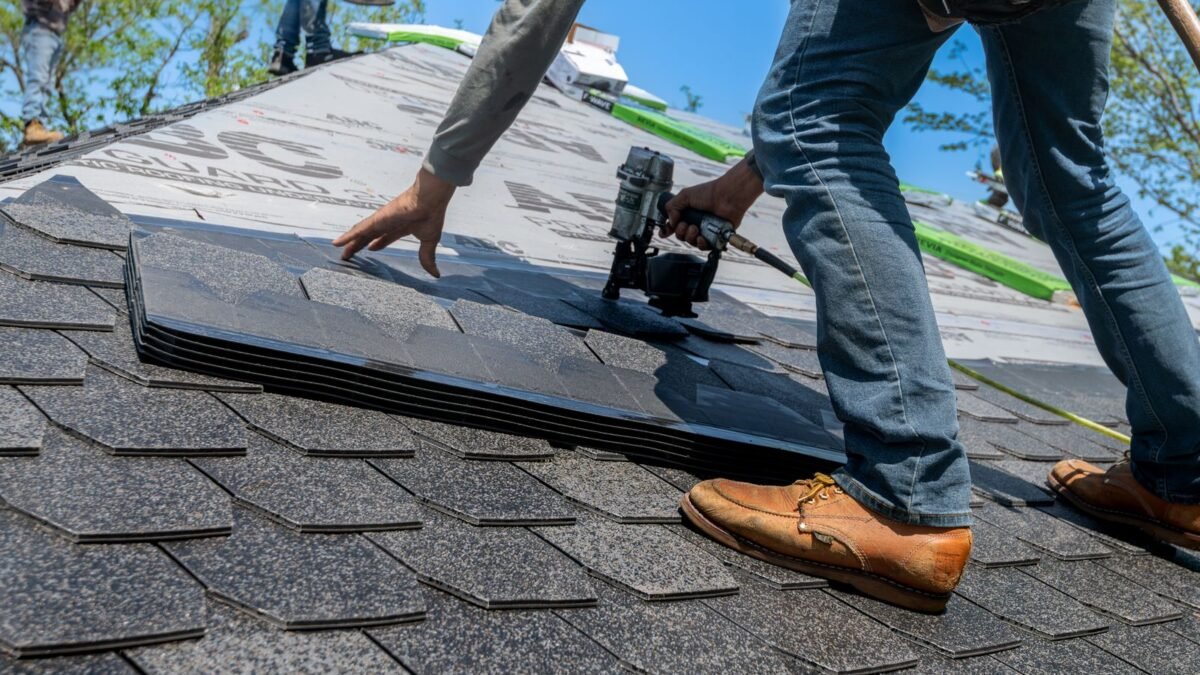
FORTIFIED is a voluntary re-roofing and building program from the Insurance Institute for Business & Home Safety (IBHS). A FORTIFIED Roof is a new roof installed to the IBHS standard: stronger deck nailing, sealed deck seams and locked-down edges. An independent evaluator documents the work, and the certificate lasts five years (FORTIFIED FAQ, February 2026). More than 100,000 families have used the program (FORTIFIED Roof page, July 2026).
The 2025 FORTIFIED Home Standard uses Hurricane rules where the design wind speed is above 115 mph and High Wind rules at or below it. The work happens at re-roof time, so it fits best when your roof is near the end of its life (see how long a roof lasts).
FORTIFIED Roof vs Silver vs Gold
Every level requires a FORTIFIED Roof (FORTIFIED FAQ), and the state grants below pay for that level. Silver and Gold reach beyond the roof.
| Designation | Covers | Main upgrades | Source |
|---|---|---|---|
| FORTIFIED Roof | The roof system | Stronger deck nailing, sealed deck, locked-down edges, wind- and rain-resistant attic vents; impact-rated covering with the optional Hail Supplement | IBHS |
| FORTIFIED Silver | Roof plus other weak spots | Gable end and chimney bracing, anchored porches and carports, pressure-rated garage doors; hurricane areas add window and door impact protection and reinforced soffits | IBHS |
| FORTIFIED Gold | Silver plus a tied-together structure | Engineered roof-to-wall, story-to-story and wall-to-foundation connections; hurricane areas add pressure-rated windows and doors and stronger, impact-resistant wall sheathing | IBHS |
What is different from a standard roof
You can use almost any type of roof covering for a FORTIFIED Roof (IBHS). What changes is how the roof deck (the plywood or OSB under the shingles) is fastened and sealed, and how the edges are locked down. IBHS testing shows that 8d ring-shank nails, which have ridges that grip the wood, set closer together can double the uplift a roof withstands. Sealing the deck seams can cut water intrusion by up to 95% if shingles blow off (FORTIFIED Roof page, July 2026).
| Part | What FORTIFIED requires | Source |
|---|---|---|
| Roof deck | 7/16 in. or thicker; ring-shank nails no more than 4 in. apart; extra nails on old decks | 2025 standard |
| Sealed deck | Tape at least 4 in. wide (3¾ in. for AAMA 711 tape) on every seam under the underlayment (the water-resistant layer), or two layers of felt, or a full self-adhered membrane | 2025 standard |
| Drip edge (metal edge strip) | At least 2 in. onto the roof, nailed no more than 4 in. apart | 2025 standard |
| Eave starter | Self-adhering starter strip or an 8 in. band of flashing cement | 2025 standard |
| Shingles | ASTM D3161 Class F or ASTM D7158 Class H wind rating | IBHS Roof page |
| Attic vents | TAS 100(A) rated and anchored for high wind | 2025 standard |
| Hail Supplement (optional) | Shingles rated Good or Excellent by IBHS (hail up to 2 in.); metal UL 2218 Class 4; tile FM 4473 Class 4 | IBHS Roof page |
Metal, tile and low-slope roofs qualify too if they are tested for your site’s wind pressures (IBHS). Pricing metal? See our metal roof cost guide.
How much extra a FORTIFIED roof costs
IBHS says the upgrade typically adds $1,000 to $3,000 on a 2,000 sq ft home, depending on design and local code (FAQ, February 2026). Louisiana’s grant results came in a little above that range.
| What was measured | Amount | Source |
|---|---|---|
| Added cost, 2,000 sq ft home | $1,000 to $3,000 | IBHS (Feb 2026) |
| Louisiana median: standard roof | $12,981 | La. Legislative Auditor (Mar 2025) |
| Louisiana median: upgrade plus evaluator | $3,248 | La. Legislative Auditor (Mar 2025) |
| Louisiana median: total | $16,229 | La. Legislative Auditor (Mar 2025) |
| Added cost over a conventional roof | $1,000 to $5,700 | Mississippi State study (Mar 2023) |
| Each evaluation | $150 to $600 | Mississippi State study (Mar 2023) |
| Renewal more than one year late | $50 extra | IBHS (Feb 2026) |
The Louisiana math: $12,981 + $3,248 = $16,229, so the upgrade was 20% of the bill ($3,248 ÷ $16,229), or 25% more than a standard roof ($3,248 ÷ $12,981). For South Louisiana homes only, the auditor put the median cost of a FORTIFIED roof plus 15 years of keeping the designation at $17,027, before the grant.
The Alabama, Louisiana and Mississippi grant pages all say you pay the evaluator, at the evaluator’s own price (October 2026), so get two or three quotes. Price the base roof with our roof replacement cost calculator, then add the upgrade.
Insurance discounts and state grant programs
Grant programs open in rounds and close when that round’s money is used up (Strengthen Alabama Homes). This is what each official page said in October 2026:
| State | Program | Grant | Status and rules | Source |
|---|---|---|---|---|
| Alabama | Strengthen Alabama Homes | Up to $10,000 | Quarterly, first come, first served; Mobile opened Oct 6 and Baldwin Oct 8, 2026; next Jan 5 and 7, 2027 | SAH site and schedule |
| Louisiana | Louisiana Fortify Homes Program | Up to $10,000 | Lottery; registration closed, next rounds to be announced | LDI |
| Mississippi | Strengthen Mississippi Homes | Up to $10,000 | Opens periodically; evaluator fee not covered | MID |
| Oklahoma | Strengthen Oklahoma Homes | Up to $10,000 | 500 homes done; more rounds planned | OID (Sept 2026) |
| South Carolina | SC Safe Home | Up to $7,500 | Coastal counties, income-based; closed, opens twice a year | SCDOI |
| North Carolina | Strengthen Your Roof | Up to $10,000 | NCIUA policyholders, Outer Banks and barrier islands | NCIUA |
| North Carolina | Strengthen Your Coastal Roof | Up to $6,000 | NCIUA policyholders, 18 coastal counties | NCIUA |
Insurers only sometimes give a discount; when they do, it comes off the wind part of the premium, not the whole bill, and many require renewal every five years to keep it (FORTIFIED FAQ). In Alabama, admitted insurers must honor the certificate with a wind discount, while surplus lines carriers do not have to (Strengthen Alabama Homes). Oklahoma reports average savings of about $750 a year (OID, September 2026). South Carolina says discounts vary by carrier, so ask your agent.
Louisiana publishes filed discounts. Its law requires admitted insurers to offer one, and most apply it to the wind and hail part of the premium:
| Insurer (Louisiana homeowners) | FORTIFIED Roof discount | Source |
|---|---|---|
| Liberty Mutual/Safeco | 40% | LDI |
| Allstate Indemnity, Encompass | 30% | LDI |
| Allied Trust | 25% | LDI |
| State Farm Fire and Casualty | 19% to 39% | LDI |
| USAA | 19% to 37% | LDI |
| Louisiana Citizens | 7.2% to 24.3% by zone | LDI |
| Progressive Property (HO-3) | 6% to 10% | LDI |
Louisiana’s Regulation 136 also sets benchmark discounts on the hurricane part of the premium, which insurers must apply by January 1, 2027:
Louisiana benchmark FORTIFIED discounts by designation and zone
FORTIFIED Roof, North: 16%
FORTIFIED Roof, Central: 27%
FORTIFIED Roof, South: 29%
Silver, North: 20%
Silver, Central: 35%
Silver, South: 43%
Gold, North: 24%
Gold, Central: 42%
Gold, South: 49%
Scale: 0% to 50% off the hurricane portion of the premium. Source: Louisiana Department of Insurance, Regulation 136 benchmarks, required by January 1, 2027; South is the state’s legal coastal zone, and LDI maps North and Central (seen October 2026).
Some insurers in Alabama, Louisiana, North Carolina, Oklahoma and Mississippi also offer a FORTIFIED endorsement, a policy add-on that helps pay to bring a new roof up to FORTIFIED after a claim. Some cover materials, labor and certification up to a limit, others only the evaluator, and at least three carriers give it free (FORTIFIED FAQ). Our guide on whether insurance covers roof replacement explains roof claims.
Is a FORTIFIED roof worth it? Payback examples
Yearly saving = the wind (or hurricane) part of your premium × your discount. Payback in years = extra cost ÷ yearly saving.
| Case | Extra cost | Yearly saving | Payback | Source |
|---|---|---|---|---|
| Louisiana median | $3,248 | $1,250 | 2.6 years ($3,248 ÷ $1,250) | La. Legislative Auditor (Mar 2025) |
| Oklahoma average saving | $1,150 to $3,600 (IBHS range plus a $150 to $600 evaluation) | About $750 | 1.5 to 4.8 years ($1,150 ÷ $750; $3,600 ÷ $750) | IBHS, Mississippi State, OID (Sept 2026) |
| Example only: $2,000 wind premium, 25% discount | $3,600 | $500 ($2,000 × 25%) | 7.2 years ($3,600 ÷ $500) | Premium assumed; 25% is Allied Trust’s filing (LDI) |
| Louisiana median if you win a $10,000 grant (lottery closed now) | None: $6,229 out of pocket vs $12,981 for a standard roof | $1,250 | Right away | La. Legislative Auditor (Mar 2025) |
For homes in South Louisiana (south of Vernon, Rapides and Avoyelles parishes), the auditor found a median cost of $17,027 to replace the roof with a FORTIFIED Roof and keep the designation for 15 years, before the grant, against $17,879 in median insurance savings over that time (March 2025). A Mississippi State study of one example home in Gulf Shores, Alabama put break-even for FORTIFIED Roof at about 5 years in the best case and 25 years in the worst (March 2023). Payback is slower when your discount is small, the wind part of your premium is small, your carrier is not required to give a discount, or you count an evaluation every five years for renewal.
How to get a FORTIFIED roof
- Check for a grant first and apply before work starts. In Mississippi, for example, work cannot start before the award, and the grant goes to the contractor only after the IBHS certificate is issued (Strengthen Mississippi Homes).
- Hire a FORTIFIED-trained roofer from the IBHS provider directory or your grant program’s list.
- Hire an independent FORTIFIED evaluator and pay them directly. In Louisiana the evaluator also judges whether the home is in good repair (LDI).
- Pull the permit and do the work. A FORTIFIED re-roof still follows local roof permit rules, and the evaluator documents each step.
- Send the certificate to your insurer and ask for the discount in writing.
- Renew every five years. IBHS renews at standard fees up to one year after expiry, adds $50 after that, and needs a full new evaluation once five years have passed since expiry (FORTIFIED FAQ).
Related calculator: Price the base roof with our roof replacement cost calculator, then add the FORTIFIED upgrade (IBHS: $1,000 to $3,000 for a 2,000 sq ft home) and the evaluator’s fee. More guides are in our roofing section.
Common questions
What is a FORTIFIED roof?
A new roof built to the IBHS FORTIFIED standard: ring-shank nails no more than 4 inches apart, sealed deck seams (usually with tape), a sealed starter strip, a drip edge nailed no more than 4 inches apart and top wind-rated shingles. An independent evaluator documents the work, and the certificate lasts five years.
How much more does a FORTIFIED roof cost?
IBHS puts the added cost at $1,000 to $3,000 for re-roofing a 2,000 sq ft home (February 2026). Louisiana’s legislative auditor found a median of $3,248 extra, evaluator included (March 2025).
How much is the FORTIFIED roof insurance discount?
It depends on your state and insurer, and it usually comes off the wind or hurricane part of the premium. Louisiana’s benchmarks for a FORTIFIED Roof are 16% to 29% off the hurricane portion, required by January 1, 2027 (Louisiana Department of Insurance), and Oklahoma reports average savings of about $750 a year (September 2026).
Is there a grant for a FORTIFIED roof?
Yes, in some states. Alabama, Louisiana, Mississippi and Oklahoma offer up to $10,000, South Carolina up to $7,500, and North Carolina’s NCIUA up to $6,000 or $10,000 by area. Rounds open and close, so check the program page first (October 2026).
How long does a FORTIFIED certificate last?
Five years. Then you need a re-designation inspection; IBHS renews at standard fees up to one year after expiry and adds a $50 fee after that (FORTIFIED FAQ, February 2026).
Can a metal or tile roof be FORTIFIED?
Yes, if it is tested for the design wind pressures at your site. For the optional Hail Supplement, metal needs a UL 2218 Class 4 rating and tile an FM 4473 Class 4 rating (FORTIFIED Roof page, July 2026).
Sources
- FORTIFIED (IBHS): FORTIFIED Roof (accessed October 2026)
- FORTIFIED (IBHS): Frequently Asked Questions (accessed October 2026)
- FORTIFIED (IBHS): 2025 FORTIFIED Home Standard (PDF) (accessed October 2026)
- Louisiana Legislative Auditor: Louisiana Fortify Homes Program, March 2025 (PDF) (accessed October 2026)
- Louisiana Department of Insurance: Louisiana Fortify Homes Program (accessed October 2026)
- Louisiana Department of Insurance: FORTIFIED Premium Discounts, 2026 Report to the Legislature (PDF) (accessed October 2026)
- Louisiana Department of Insurance: Residential Hurricane-Only Premium Discounts (accessed October 2026)
- Strengthen Alabama Homes (Alabama Department of Insurance): Program page (accessed October 2026)
- Strengthen Alabama Homes: Grant Award Schedule (accessed October 2026)
- Mississippi Insurance Department: Strengthen Mississippi Homes (accessed October 2026)
- Oklahoma Insurance Department: Strengthen Oklahoma Homes reaches 500th home (accessed October 2026)
- South Carolina Department of Insurance: SC Safe Home Grant (accessed October 2026)
- NCIUA: Strengthen Your Roof (accessed October 2026)
- NCIUA: Strengthen Your Coastal Roof (accessed October 2026)
- Mississippi-Alabama Sea Grant Consortium: Study analyzes homeowner cost-benefit of FORTIFIED building (accessed October 2026)